
3 Reasons Hair fall in South Asians
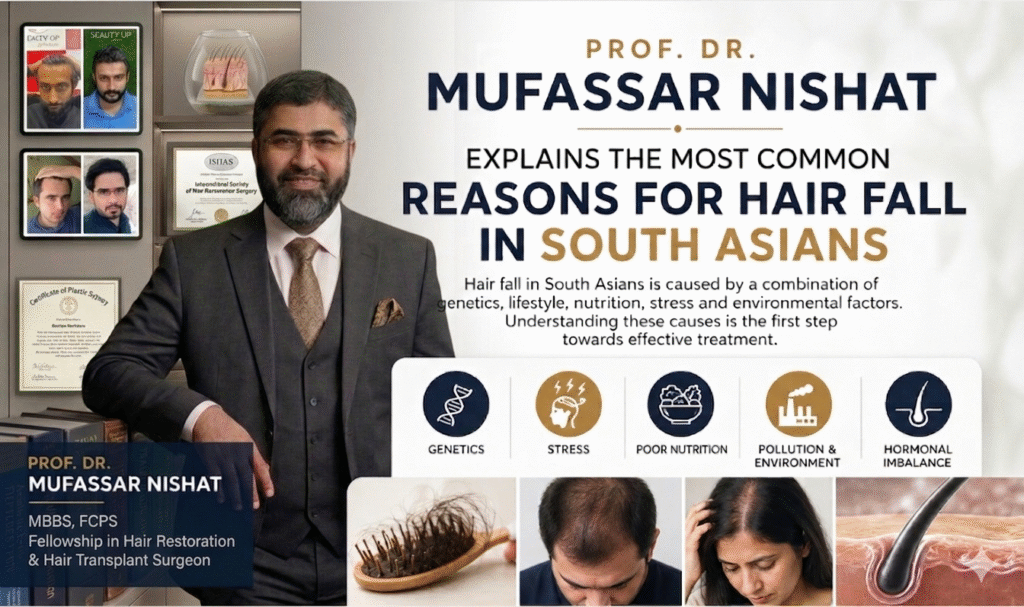
Hair loss is often associated with aging, but an increasing number of young adults—some as young as 18—are noticing significant thinning. While many attribute this to lifestyle or environment, the biological reality is often more complex.
This guide explores the primary reasons for hair loss in young adults, distinguishing between common myths and medical facts.
1. The Biological Root: Hormonal Factors
The most significant cause of hair loss in young men is hormonal, specifically involving Dihydrotestosterone (DHT).
- The Role of Testosterone: As young men enter and move through puberty, testosterone levels are active. In some individuals, an enzyme converts testosterone into DHT.
- Targeted Sensitivity: The hair follicles at the front and top of the head often have receptors that are sensitive to DHT. When the hormone binds to these receptors, it weakens the hair, leading to thinning and eventually permanent loss.
- The “Permanent Zone”: Interestingly, hair at the back and sides of the head is typically resistant to these hormonal effects, which is why male pattern baldness usually follows a specific shape.
2. Genetics and Family History
Genetic predisposition plays a massive role. If hair loss is prevalent on either the maternal or paternal side of your family, your hair follicles are likely more sensitive to the hormonal changes mentioned above. In cases with strong genetic links, environmental factors often play a secondary role compared to the biological “default” of your scalp.
3. Common Environmental and Lifestyle Factors
While hormones are the primary driver, several external factors can accelerate the process or worsen the quality of your hair:
- Excessive Styling: Procedures like chemical straightening, rebounding, or the frequent use of heavy styling gels can damage the hair shaft and irritate the scalp.
- Scalp Health: Chronic dandruff or fungal infections can create an unhealthy environment for hair growth, leading to increased shedding.
- Water Quality: In certain regions—particularly for those traveling from areas with hard water or desalinated water—high mineral content can make hair brittle and more prone to breakage.
- Sleep and Stress: Irregular sleep cycles (staying up late and sleeping during the day) and high psychological stress can disrupt the body’s natural cycles, including the hair growth phase.
4. Nutritional Deficiencies
A diet lacking in essential vitamins and minerals can trigger Telogen Effluvium, a temporary form of hair loss. Young adults on restrictive diets or those with poor nutritional habits may lack the iron, zinc, and protein necessary for maintaining hair density.
Frequently Asked Questions
Why is my hair only falling out at the front?
This is typically due to Androgenetic Alopecia. The hair follicles at the front and top of the head are biologically different from those at the back; they contain receptors that react to DHT, causing them to shrink and stop producing hair over time.
Can hard water cause permanent baldness?
Hard water or “khara pani” can cause hair to become dry and break easily, but it is rarely the sole cause of permanent balding. If you are balding in a specific pattern (like a receding hairline), the cause is likely hormonal rather than environmental.
At what age should I see a specialist for hair loss?
If you are over 18 and notice a visible change in your hairline or significant thinning on the crown, it is best to consult a plastic surgeon or hair specialist immediately. Early intervention with a customized treatment plan can often slow down the process before a hair transplant becomes necessary.
Is hair transplant a permanent solution for young adults?
Yes. Because hair from the back of the head is naturally resistant to the hormones that cause balding, when these follicles are transplanted to the front, they maintain that resistance and continue to grow for a lifetime.
For more insights into hair health and restoration, you can view the full discussion from Dr. Mufassar here.