
Exosome Therapy and reality
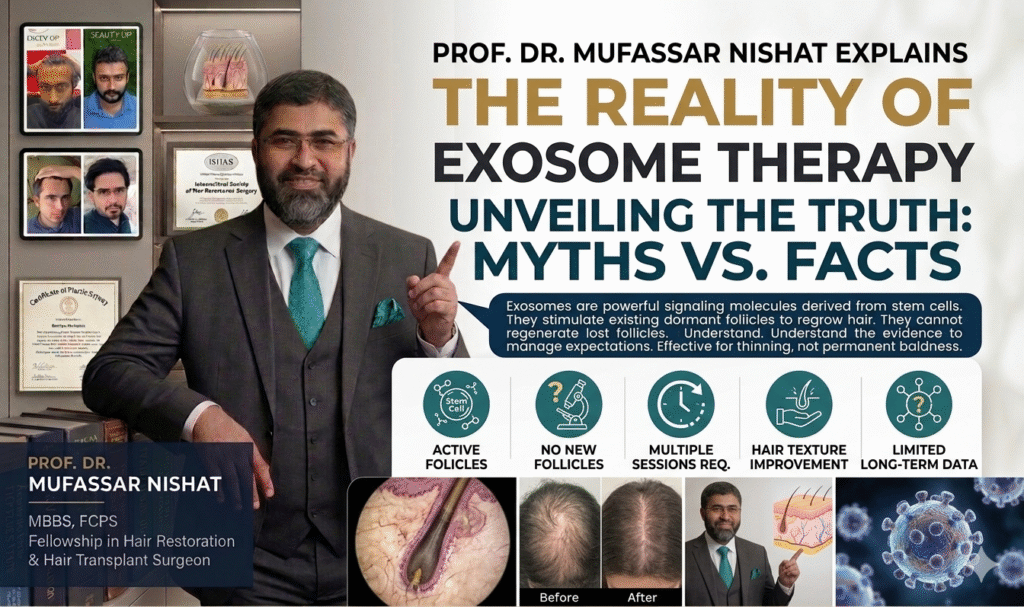
Exosomes for Hair Loss: Effectiveness, Science, and Expectations
The buzz around Exosome therapy has grown significantly, with many claiming it to be a revolutionary remedy for hair regrowth. However, understanding what they are and how they actually function is essential before considering them as an alternative to a hair transplant.
What are Exosomes?
Exosomes are essentially prepared stem cells derived from various origins, including plants and animals. They act as microscopic messengers that carry signaling proteins, lipids, and genetic material to other cells.
In the context of hair restoration, the goal of Exosome therapy is to:
Stimulate hair follicles that are still alive but in a dormant phase.
Improve the overall growth environment of the scalp.
Enhance the density and quality of existing hair.
Can Exosomes Grow New Hair?
A common misconception is that Exosomes can create hair where none exists.
The Reality: If a hair follicle is completely gone (permanent baldness), Exosome therapy cannot spontaneously grow a new one. It is most effective when used to “click” or jumpstart follicles that are still present but performing poorly.
Growth vs. Replacement: While it can promote hair growth, it is not a direct replacement for the surgical results of a hair transplant.
Types and Quality of Exosomes
The market is flooded with different types of Exosome treatments, including Spanish, Korean, Chinese, and American varieties. They are often categorized by their concentration, ranging from 5 billion to 30 billion particles.
Choosing the right one involves several factors:
Cold Chain Maintenance: Some high-quality Exosomes must be kept at specific cold temperatures (cold chain) to remain effective.
Concentration: Higher numbers don’t always guarantee better results; the source and preparation of the stem cells matter significantly.
Sessions and Longevity
Is Exosome therapy a “once in a lifetime” procedure?
Duration of Results: Currently, there is limited long-term data on how long the effects last.
Multiple Sessions: A single session is rarely sufficient for significant hair fall control. Most patients require repeated treatments to maintain and build upon their results.
Expert Advice for Patients
Because Exosome therapy is highly specialized, the effectiveness depends largely on the quality of the product and the technique used.
Consult a Professional: Discuss with your plastic surgeon or hair specialist to see which specific brand or type they have had the best clinical success with.
Manage Expectations: Understand that while Exosomes are a powerful tool for hair thinning, they work best on active follicles rather than completely bald areas.
Combine Treatments: Often, surgeons will use Exosomes in conjunction with other hair loss treatments to maximize the outcome.
For a detailed breakdown of Exosome technology in hair care, watch the full explanation from Prof. Dr. Mufassar here.