
Diabetes and Hair Transplant ? Safety, Criteria, and the Path to Success
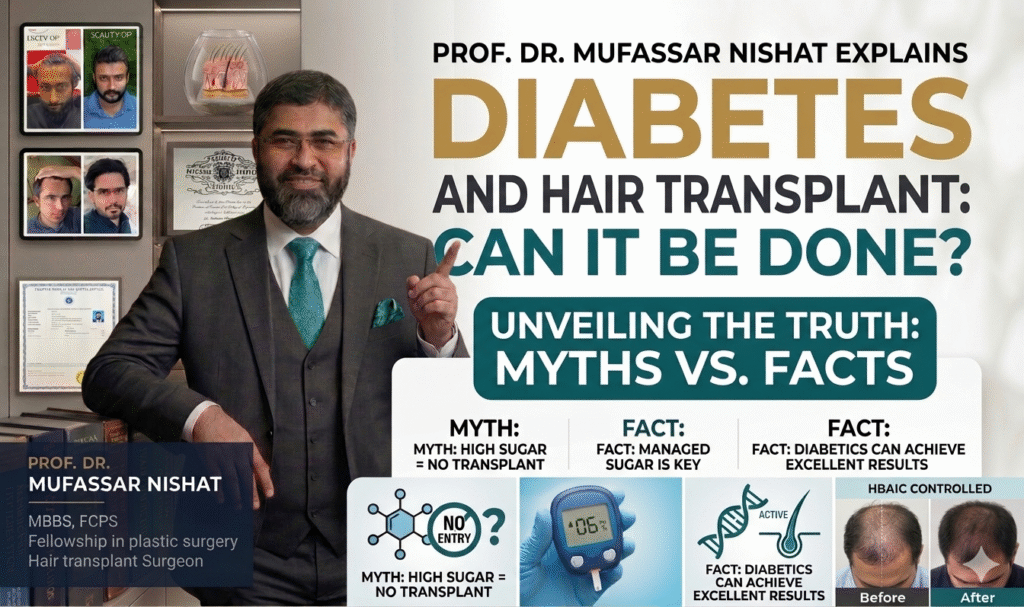
Diabetes and Hair Transplant? Safety, Criteria, and the Path to Success
For individuals living with diabetes, any surgical procedure—no matter how minor—often comes with a layer of anxiety. The most common question asked in hair restoration clinics is: “Can I get a hair transplant if I have high sugar?” The short answer is a resounding yes. However, the long answer involves a sophisticated medical approach that prioritizes patient safety, blood sugar stability, and specific surgical modifications to ensure the best possible outcome.
Being diabetic does not mean you have to live with hair loss. With the guidance of a qualified plastic surgeon and a clear understanding of your body’s unique needs, you can achieve natural-looking hair restoration.
The Science of Blood Sugar and Surgical Safety
The primary concern when performing a hair transplant on a diabetic patient is the body’s ability to heal. High glucose levels in the bloodstream can affect blood circulation and the body’s immune response, potentially leading to slower recovery times or a higher risk of infection. To mitigate these risks, surgeons do not just look at your sugar levels on the day of the surgery; they look at your long-term health trends.
The HbA1c Factor: Your Medical Passport
While routine fasting or random blood sugar tests are common, they only provide a “snapshot” of your current state. For a safe surgical procedure, medical professionals rely on the HbA1c test.
What it reveals: This test reflects your average blood sugar levels over the last three months.
Trend Analysis: A one-time “good” reading isn’t enough. Your surgeon will analyze the HbA1c trend—determining if your levels are stable, improving, or fluctuating wildly. Stability is the green light for surgery.
Safety Thresholds: While thresholds vary, most specialists prefer an HbA1c level that shows the diabetes is well-controlled. If your levels are too high, your surgeon will likely work with you to stabilize them before scheduling the procedure.
Comprehensive Health Assessment
A hair transplant surgeon who is also a trained plastic surgeon looks at the “whole patient,” not just the scalp. Because diabetes can impact various systems in the body, a comprehensive evaluation is mandatory.
Organ Function and Systemic Health
Before the first incision is made, your medical team will assess:
Cardiovascular Health: Ensuring the heart can handle the local anesthesia and the duration of the procedure.
Kidney and Liver Function: Diabetes can sometimes affect these vital organs, which play a role in how the body processes medications used during and after the transplant.
Microcirculation: The success of a hair transplant depends on the blood supply to the newly implanted follicles. The surgeon must ensure that your scalp has healthy blood flow to “feed” the grafts.
Surgical Adjustments for Diabetic Patients
To ensure safety and optimal results, the standard FUE (Follicular Unit Extraction) or DHI (Direct Hair Implantation) techniques are often modified for diabetic clients. These are not compromises in quality, but rather strategic enhancements.
1. Strategic Graft Density
In a standard transplant, the goal is often maximum density. However, for diabetic patients, a surgeon may choose to slightly increase the spacing between transplanted follicles.
Why? Lowering the initial density reduces the metabolic demand on the skin during the first critical days of healing. By giving each graft a bit more “breathing room,” the skin can heal more efficiently without becoming overwhelmed.
2. Enhanced Infection Control
Diabetic skin can be more prone to bacterial interference. To counter this, facilities often implement:
Strict Sterile Protocols: Ensuring the surgical environment is beyond reproach.
Post-Operative Antibiotics: A more proactive approach to preventative medication to ensure the healing phase remains uncomplicated.
Post-Operative Care: The Healing Journey
The recovery phase is where the patient plays the most significant role. For a diabetic individual, the “aftercare” instructions are the most important part of the journey.
Glucose Monitoring: It is vital to keep blood sugar levels strictly controlled in the weeks following the transplant. Spikes in sugar can hinder the “take” rate of the new grafts.
Wound Care: Following the surgeon’s cleaning instructions to the letter ensures that the micro-wounds heal without scarring.
Patience with Results: While the initial healing might take a few days longer than it would for a non-diabetic patient, the final growth result (usually seen between 6 to 12 months) is typically just as impressive.
Choosing the Right Specialist
The success of a hair transplant for diabetics rests almost entirely on the expertise of the medical team. You need a specialist who understands the physiological nuances of diabetes and who can pivot the surgical plan based on your biological response.
Questions to ask your surgeon:
How many diabetic patients have you successfully treated?
What is your specific protocol for monitoring my vitals during the 6–8 hour procedure?
How will you adjust the density of my grafts to ensure my scalp heals perfectly?
Final Verdict: Should You Do It?
In short, there is no absolute contraindication for hair transplants in diabetic patients. If your diabetes is managed, and you choose a facility led by a qualified plastic surgeon who prioritizes medical safety over “sales,” you can achieve excellent, life-changing results.
Don’t let a medical diagnosis stop you from feeling confident. With the right data (like your HbA1c) and the right expert, your path to a full head of hair is clear.
For a deeper dive into the clinical criteria for diabetic hair restoration, watch the expert breakdown from Prof. Dr. Mufassar here.