
FUE vs DHI Hair Transplant: A Complete Informative Guide
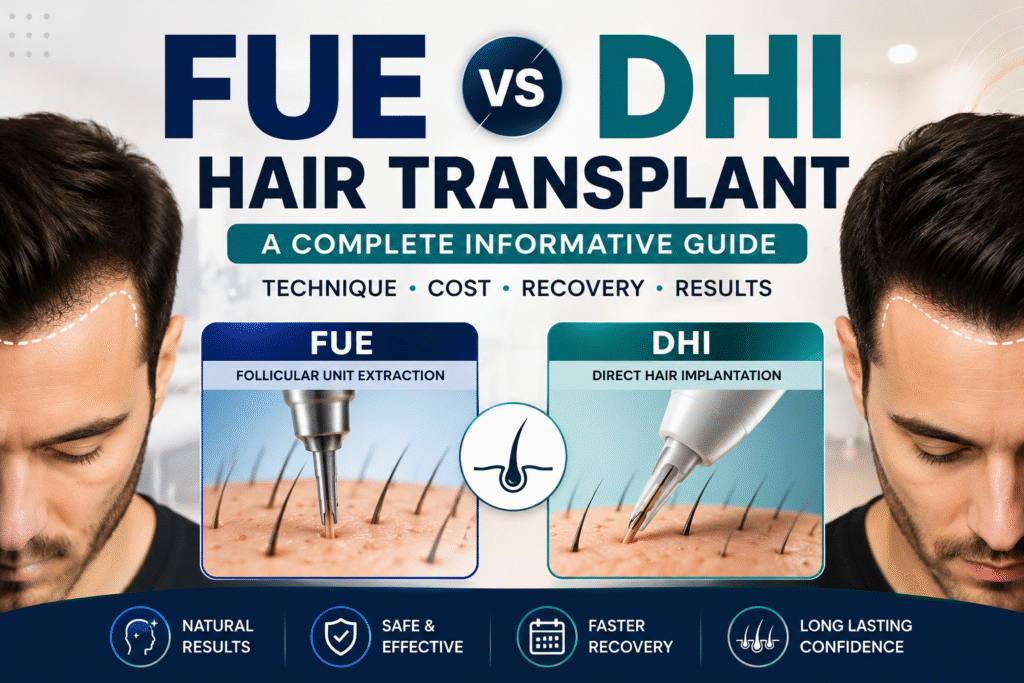
A hair transplant is a medical hair restoration procedure used to move healthy hair follicles from a donor area to thinning or bald areas. Many people compare FUE and DHI before deciding which method may be suitable for them. Both techniques can be effective, but the right choice depends on hair-loss pattern, donor-area strength, scalp condition, graft requirement and realistic expectations.
People searching for hair transplant in Lahore, best hair transplant in Lahore, good hair transplant in Lahore or cheap hair transplant in Lahore should understand that technique names alone do not guarantee results. A safe and natural outcome depends on assessment, planning and qualified medical care.
What Is FUE?
FUE stands for Follicular Unit Extraction. In this technique, individual hair follicles are extracted from the donor area, usually the back or sides of the scalp. These follicles are then implanted into areas affected by thinning or baldness.
FUE is commonly used because it does not involve removing a long strip of scalp. Instead, it creates tiny extraction points that usually heal as small dot-like marks. People searching for FUE Lahore often want information about hairline restoration, crown coverage and density improvement.
- Hairline restoration
- Crown hair transplant
- Mid-scalp thinning
- Beard or eyebrow restoration
- Larger hair restoration sessions
What Is DHI?
DHI stands for Direct Hair Implantation. It is often described as a variation of FUE because the follicles are still extracted individually. The difference is mainly in the implantation step. In DHI, grafts are placed using an implanter tool that may help control angle, depth and direction in selected cases.
People searching for DHI Lahore usually want to know whether DHI is more advanced than FUE. DHI can be useful in certain cases, especially for detailed placement or limited treatment areas, but it is not automatically better for everyone.
FUE vs DHI: Key Differences
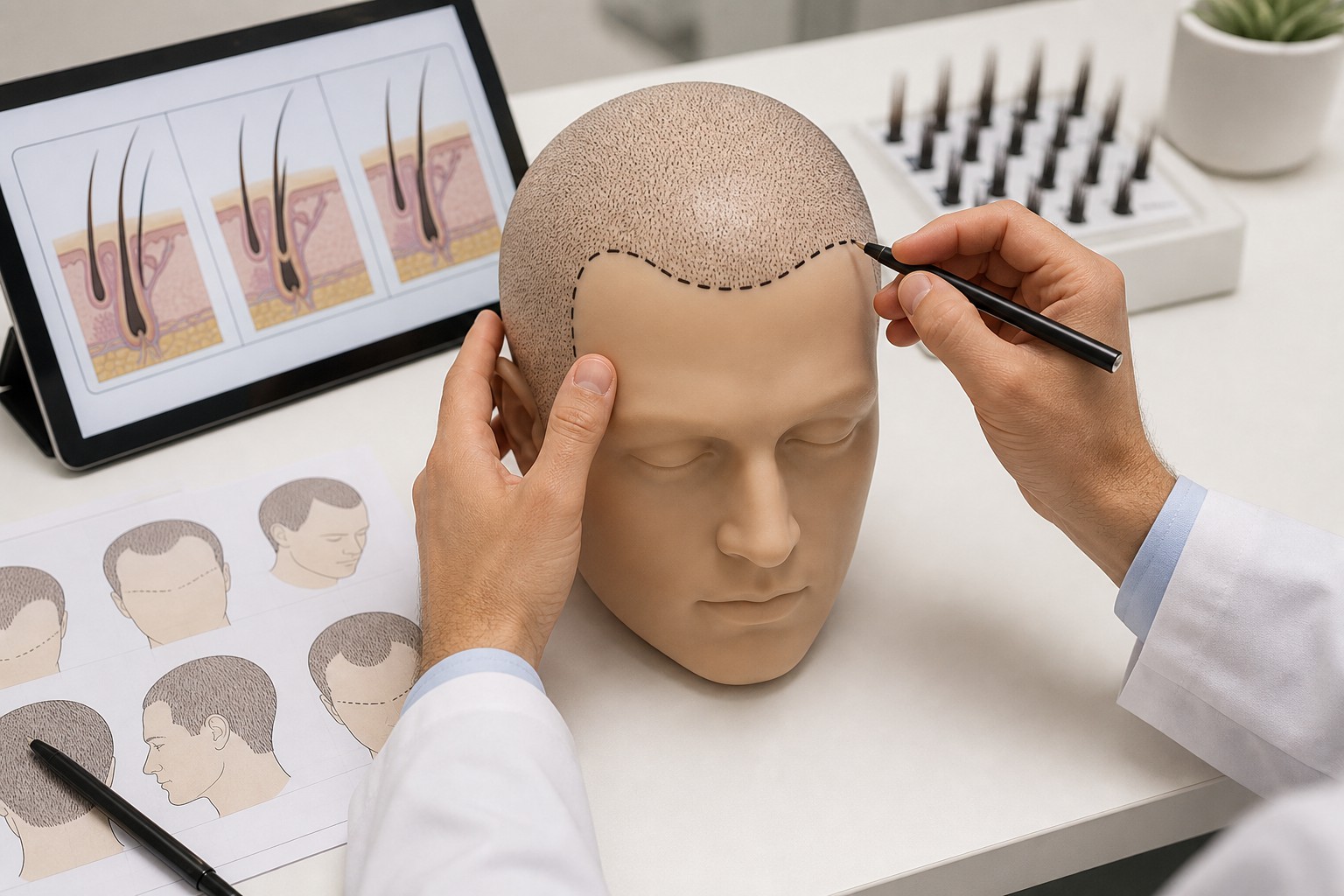
The main difference between FUE and DHI is how the grafts are placed into the scalp. In FUE, recipient sites are usually created first, and grafts are then inserted into those sites. In DHI, grafts may be placed directly with an implanter device.
FUE is often preferred for larger coverage areas, while DHI may be considered for smaller or more detailed zones. However, final results depend on donor hair quality, graft number, hairline design, surgeon experience, scalp condition and aftercare compliance.
Which Technique Looks More Natural?
Both FUE and DHI can look natural when planned properly. Natural results depend less on the technique name and more on hairline design, graft angle, direction and density distribution.
A natural hairline usually follows facial proportions and age-appropriate design. If the hairline is too low, too straight or too dense, it may look artificial over time. This is why consultation and planning are important before choosing any method.
How Many Grafts Are Needed?
The number of grafts depends on the size of the thinning area, donor-area density, hair thickness and desired coverage. Some people need hairline work only, while others need crown or mid-scalp coverage.
A proper graft estimate usually requires physical examination or detailed scalp assessment. Online estimates can give a rough idea, but they cannot replace medical evaluation.
Cost Factors
Cost varies depending on technique, graft number, clinic setting, surgeon involvement and aftercare. People often search for cheap hair transplant in Lahore, but price should not be the only deciding factor.
A low-cost option may not always include detailed planning, donor-area protection or proper follow-up. On the other hand, a higher price does not automatically guarantee better results. Patients should compare safety, transparency and medical supervision.
Why Doctor Qualification Matters
A hair transplant is a medical procedure. A qualified doctor should assess whether the patient is suitable, whether hair loss is stable and whether the donor area can safely support the planned grafts.
Some patients also search for plastic surgeon in Lahore or best plastic surgeon in Lahore when looking for surgical expertise. The key point is to choose a qualified, experienced medical professional who understands scalp health, wound healing and aesthetic balance.
Role of Hair PRP
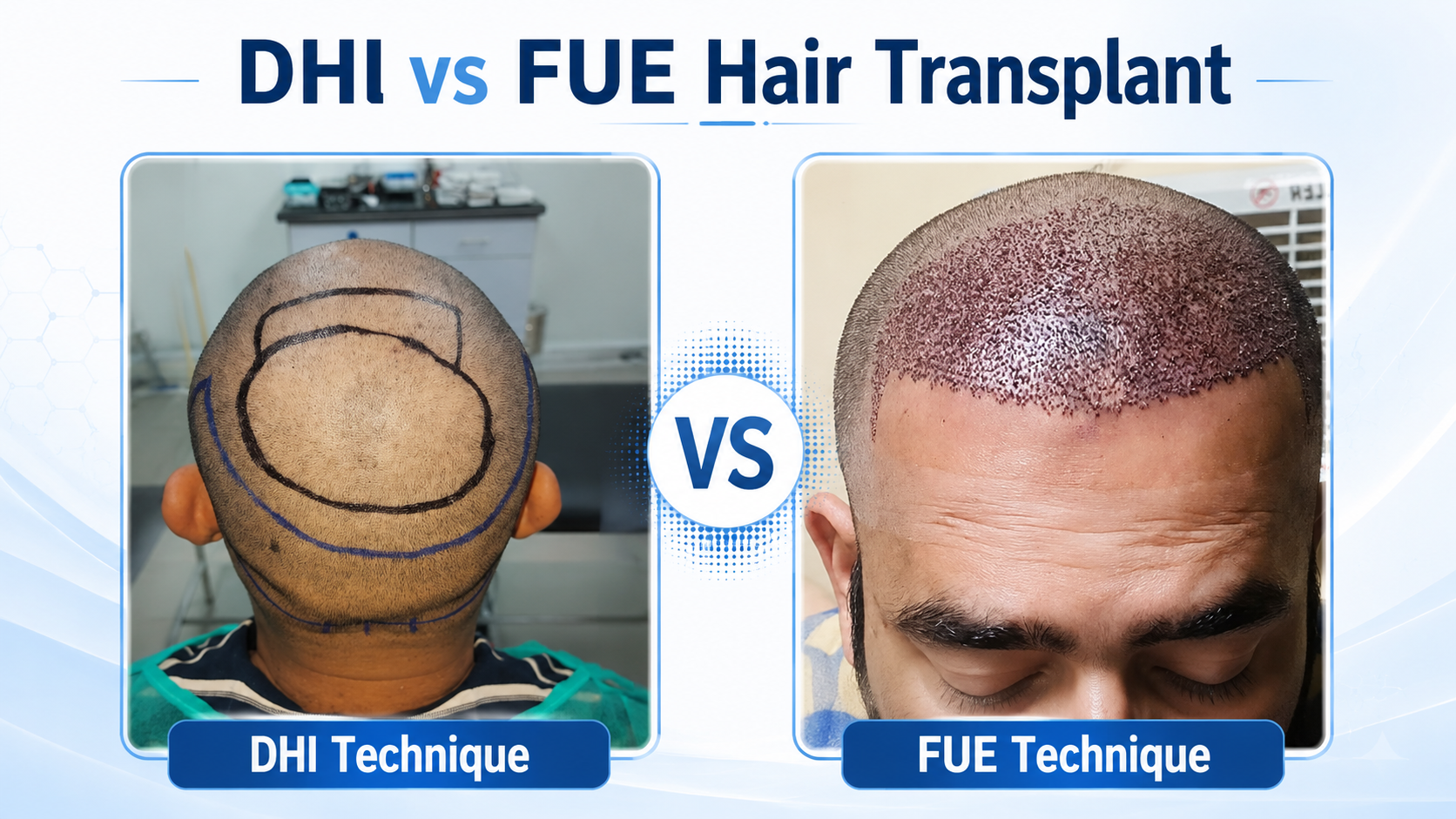
Hair PRP stands for platelet-rich plasma therapy. It uses a concentration of platelets from the patient own blood and may be used to support weak existing hair in selected cases.
PRP does not replace a transplant when follicles are absent, but it may be recommended as part of a broader hair restoration plan. Some people may also hear about hair meso PRP, which refers to
mesotherapy-style scalp support combined with PRP-based treatment planning.
Hair Exosome Support
Hair exosome therapy is another regenerative approach discussed in modern hair restoration. It is generally used for selected patients who may need scalp and hair-quality support. Like PRP, it should be considered only after proper consultation and suitability assessment.
Patients should avoid assuming that every regenerative treatment is suitable for every type of hair loss. Diagnosis matters.
Recovery After FUE and DHI
Recovery varies from person to person. Mild swelling, redness, scabbing and tightness can occur after a hair transplant. Patients are usually advised to protect the scalp, follow washing instructions and avoid scratching.
Temporary shedding may happen in the first few weeks. This does not always mean treatment failure. New growth usually appears gradually over several months, and final results may continue improving for 9 to 12 months or longer.
Related Aesthetic Treatments
People researching hair restoration may also explore other aesthetic procedures such as laser hair removal, Hydrafacial, Botox, filler and facelift threads. These treatments are different from hair transplant but may be part of broader cosmetic or aesthetic care. Each treatment has different indications, risks and
suitability criteria, so consultation is important before starting any procedure.
How to Choose Safely
A good hair transplant in Lahore should be based on safety, transparency and realistic planning rather than exaggerated guarantees. Patients should ask whether the diagnosis is clear, whether the donor area is strong enough, how many grafts are recommended, who designs the hairline and what aftercare is provided.
Final Thoughts
FUE and DHI are both modern hair transplant techniques. Neither is universally best. The right method depends on the patient hair-loss pattern, donor-area quality, treatment goals and medical suitability.
Anyone considering hair transplant in Lahore should focus on proper assessment, qualified care, realistic expectations and long-term planning instead of choosing only by price or technique name.
FAQs
Is DHI better than FUE?
Not always. DHI may be useful for selected cases, while FUE may be better for larger coverage. Suitability depends on assessment.
Is FUE painful?
Local anesthesia is usually used. Some discomfort, tightness or soreness may occur after the procedure.
Can PRP replace a hair transplant?
No. PRP may support weak existing hair, but it cannot replace follicles in completely bald areas.
How long does hair transplant recovery take?
Early healing may take days to weeks. Visible growth usually takes months, and full improvement may take up to a year or longer.
Is a cheap hair transplant safe?
It depends on medical supervision, graft handling, donor-area care and aftercare. Cost should not be the only factor.