
Hair Transplant Aftercare: Day-by-Day Recovery Timeline and Essential Tips
Hair Transplant Aftercare: Day-by-Day Recovery Timeline and Essential Tips
Hair transplant aftercare begins the moment your procedure ends. The surgery may be completed in one day, but the way you protect the recipient area, donor area and newly implanted grafts during the following weeks can influence comfort, healing and the quality of your final result. Patients often feel anxious about washing, sleeping, swelling, scabs, shock loss and the point at which normal work or exercise can resume. A clear recovery timeline makes those changes easier to understand.
This guide explains what commonly happens from day 1 to month 12 after FUE, Sapphire FUE or DHI hair restoration. It is educational rather than a substitute for your surgeon’s instructions. Techniques, graft numbers, medicines and medical histories differ, so the protocol provided by your own clinic should always take priority. The NHS notes that transplanted grafts require particular care during the first two weeks and that visible results develop gradually over many months.
Why Hair Transplant Aftercare Matters
First 14 days after a hair transplant: protect grafts, wash gently and avoid scratching.
A hair transplant moves living follicular units from a donor area, usually the back or sides of the scalp, into thinning or bald areas. Immediately after implantation, the recipient sites are healing and the grafts are vulnerable to rubbing, pressure and accidental trauma. The donor area is also recovering from thousands of tiny extraction points in FUE-based procedures or a linear wound in strip surgery.
Good aftercare does not create extra grafts, and it cannot guarantee a particular density. Its role is to protect the work already completed, reduce avoidable irritation, support wound healing and help the clinical team identify complications early. The International Society of Hair Restoration Surgery describes mild discomfort and temporary tenderness as common after surgical hair restoration, while emphasising the importance of physician-directed postoperative care.
Hair Transplant Aftercare: Day 0 to Day 2
The first 48 hours are normally the most protective phase. Follow the clinic’s instructions for saline spray, dressings and prescribed medicines exactly. Do not add painkillers, antibiotics, vitamins, oils or herbal products unless the treating doctor approves them, because some products can affect bleeding, interact with medication or irritate the scalp.
Sleep on your back with the head elevated as advised, often using extra pillows or a travel pillow to reduce accidental contact with the recipient area. Mild tightness, tenderness, redness and forehead swelling may occur. Avoid bending for prolonged periods, strenuous activity, dust, smoke and direct sun. Do not touch the grafts to “check” them, and do not remove crusts. If there is persistent bleeding, rapidly worsening pain, fever, pus or a reaction to medication, contact the clinic promptly.
Days 3 to 5: Swelling, Scabs and Gentle Protection
During days 3 to 5, tiny scabs around the implanted hairs are expected. Some patients notice swelling moving from the forehead toward the eyelids before it settles. The pattern and severity vary. Continue sleeping and spraying as instructed, and keep clothing away from the scalp. A button-front or zip-front shirt is often easier than pulling a tight T-shirt over the head.
Do not use a powerful shower jet, fingernails or a rough towel on the grafts. If the clinic has provided a first-wash appointment, attend it. Clinics use different washing schedules, so a general internet timetable should never replace the plan given for your procedure. The goal is controlled cleansing without friction or high water pressure.
Days 6 to 10: How to Wash After a Hair Transplant
Many patients are allowed to begin or continue gentle hand washing during this period. The NHS indicates that gentle hand washing may be possible around day 6, but your surgeon may use a different schedule. Use the shampoo or lotion recommended by the clinic. Apply it softly, rinse with low-pressure lukewarm water and avoid scratching. Pat the surrounding area dry or allow it to air-dry according to instructions.
Scabs should loosen gradually rather than being forcibly picked. Picking can cause bleeding, inflammation and avoidable trauma. Itching is common as healing progresses, but scratching with nails is unsafe. Ask the clinic how to manage severe itching instead of applying an unapproved topical product. Continue to avoid hair fibres, gels, sprays, dye, henna and styling chemicals until the medical team clears them.
Days 10 to 14: Returning to a More Normal Routine
By the end of the second week, redness and crusting are often much less noticeable, although fair or sensitive skin can remain pink for longer. Grafts are generally more secure than they were during the first days, but the scalp can still be tender. Depending on the nature of your job, many people return to office work within one to two weeks. Work involving heat, dust, helmets, heavy lifting or direct sunlight may require extra time or modifications.
Do not assume that a normal-looking scalp means every restriction has ended. Ask specifically about helmets, caps, motorcycle travel, gym training, swimming and contact sports. The right date depends on wound healing, technique and the fit or pressure of the equipment.
Weeks 2 to 6: Shock Loss Is Usually Part of the Process
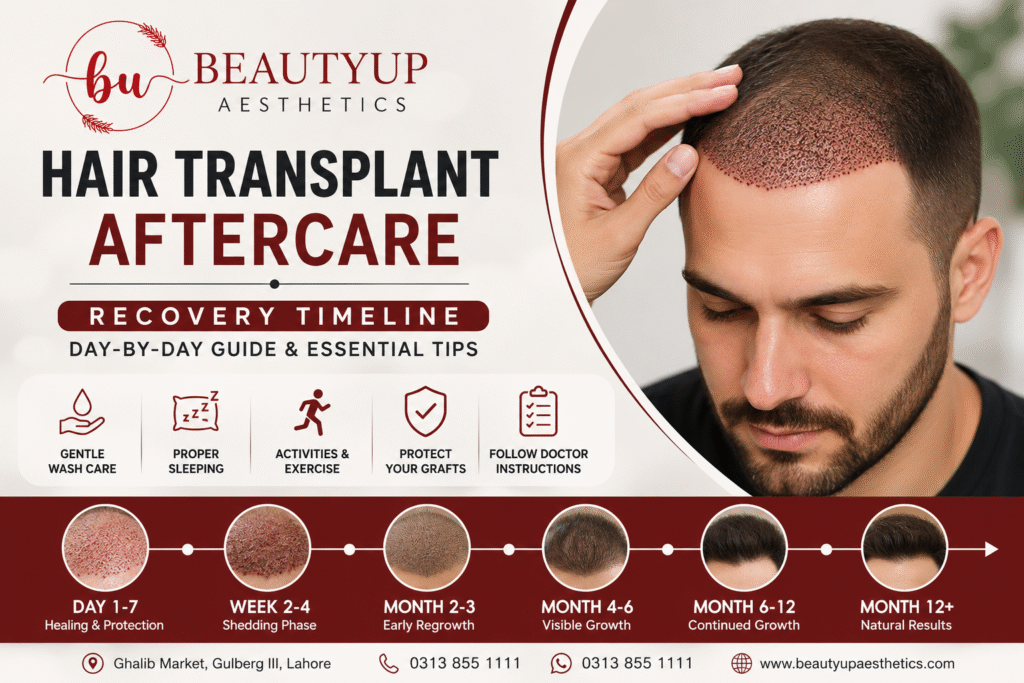
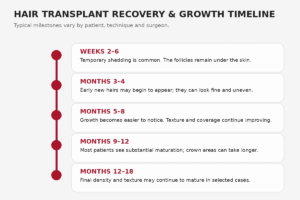
Typical hair transplant shedding, regrowth and maturation milestones.
One of the most alarming stages is temporary shedding, often called shock loss. The visible hair shafts from transplanted follicles may fall during the first several weeks. This does not automatically mean that the grafts have failed; the follicles can remain beneath the skin and enter a resting phase before producing new hair. Existing non-transplanted hairs near the treated zone can also shed temporarily in some patients.
Avoid judging the final result during this phase. Continue prescribed treatment and attend follow-up appointments. Take clear monthly photographs in the same lighting, distance and angle rather than inspecting the scalp several times a day. Consistent photographs make gradual change easier to evaluate and reduce the effect of lighting or hairstyle on perception.
Months 3 to 4: Early Regrowth
New growth often begins to become visible around the third or fourth month, although timing varies. Early hairs can be fine, colourless, wiry or uneven. Some zones may start before others, and crown growth can lag behind the frontal area. These differences are usually assessed over months rather than weeks.
At this stage, your surgeon may review scalp health, donor healing and the condition of the existing hair. Medical therapy or treatments such as PRP may be discussed for selected patients, but they are not mandatory for everyone and should be recommended after assessment. Beauty Up Aesthetics provides a dedicated page explaining PRP, PRGF and exosome-based hair support options for suitable cases.
Months 5 to 8: Noticeable Improvement
Between months 5 and 8, many patients begin to see more obvious coverage. Hair shafts often become longer and thicker, making styling easier. Density may still look incomplete because follicles do not all enter active growth at the same time. Texture can also continue changing.
Continue protecting the scalp from excessive sun and follow the clinic’s advice regarding haircuts, colouring and chemical treatments. Healthy nutrition, adequate protein and correction of any diagnosed deficiency support general hair health, but supplements should not be used blindly. A clinician can investigate ongoing diffuse shedding, scalp disease or symptoms suggesting iron, thyroid, vitamin or hormonal problems.
Months 9 to 12 and Beyond: Maturation of the Result
Substantial cosmetic improvement is commonly assessed around months 9 to 12, but final maturation may take 12 to 18 months, especially in crown work or slower-growing cases. The NHS similarly notes that full results can take many months to appear. The transplanted hair needs time not only to emerge but also to lengthen, thicken and blend with surrounding hair.
A responsible review considers hairline naturalness, direction, coverage, donor-area appearance and the stability of untreated hair. More surgery should not be planned simply because the result looks incomplete at an early month. The surgeon needs adequate time to evaluate the outcome and preserve the donor supply for the future.
Exercise, Swimming, Sun and Daily Activities
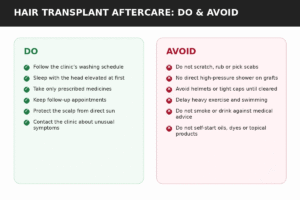
Essential hair transplant aftercare actions and activities to avoid.
Light walking is often encouraged, but strenuous exercise can increase sweating, swelling and accidental contact during early healing. Many surgeons restrict heavy exercise for a period that depends on the procedure and individual recovery. Swimming introduces water, chemicals and infection exposure, so wait for explicit clearance before using a pool, sauna or steam room.
Direct sunlight can irritate healing skin and prolong redness. Stay in shade and use only the head covering or sunscreen strategy approved by the clinic; tight caps can rub the recipient area. Smoking and alcohol can interfere with recovery or medication plans, so follow the surgeon’s specific restrictions rather than relying on a generic rule.
Common Mistakes That Can Disrupt Recovery
The most preventable mistakes are rubbing or scratching the grafts, picking scabs, using direct shower pressure, wearing a tight helmet too early, returning to heavy exercise without clearance and applying home remedies. Another common error is stopping or starting medication based on social-media advice. Hair transplant patients may have different medical conditions and prescriptions, so medication decisions belong to the treating clinician.
Comparing your day-by-day appearance with another person can also create unnecessary worry. Redness, scab formation, swelling, shedding and growth speed vary with skin type, graft count, technique, recipient area and individual biology. Use your clinic’s progress checks as the reference point.
When Should You Contact the Clinic?
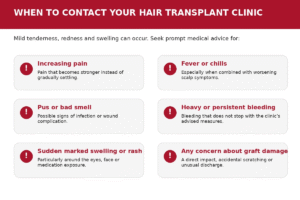
Symptoms that should be reported to a hair transplant clinic promptly.
Contact the medical team if pain is increasing rather than improving, bleeding is persistent, swelling is severe or sudden, or you develop fever, chills, pus, a bad smell, spreading redness, a new rash or medication-related symptoms. Also report any direct impact to the grafts or uncertainty about wound healing. Early advice is safer than waiting for a routine appointment.
For non-urgent questions, send clear photographs taken in good light and explain the day of recovery, current medicines and symptoms. Avoid applying antiseptics, antibiotics or steroid creams unless the clinic instructs you to do so.
Choosing Follow-Up Care in Lahore
Aftercare should be discussed before the procedure, not added as an afterthought. Ask who will answer postoperative questions, when the first wash and review will occur, what is included in the package, and how urgent concerns are handled. Patients considering FUE or DHI can review Beauty Up Aesthetics’ hair transplant services and book an in-person consultation in Gulberg 3, Lahore for case-specific planning.
A successful recovery requires realistic expectations. The first two weeks are about protecting healing tissue; the next few months are about patience; and the final assessment happens only after the hair has had enough time to mature.
Frequently Asked Questions
When can I sleep normally after a hair transplant?
Many clinics recommend sleeping on the back with the head elevated during the first several nights. Return to normal sleeping positions only when your surgeon confirms that pressure and rubbing are no longer a concern.
When can I wash my hair?
Washing schedules vary. Some patients begin a controlled wash within a few days, while others attend a clinic wash first. Use low pressure, lukewarm water and the recommended cleanser, and follow the exact written protocol from your surgeon.
Is shedding after a hair transplant normal?
Temporary shedding of transplanted hair shafts during the first several weeks is common. New growth usually develops later from follicles beneath the skin. Sudden symptoms, wound problems or concerns about graft loss should still be reviewed by the clinic.
When can I return to the gym?
The date depends on healing and exercise intensity. Light activity may resume earlier than heavy lifting, intense cardio, contact sports or swimming. Obtain clearance from the treating team.
How long until the final result?
Early growth may appear around months 3 to 4, with progressive improvement over the following months. Many results are assessed around 9 to 12 months, while some areas can continue maturing up to 18 months.
Final Word
Hair transplant aftercare is a structured process, not a single set of rules copied from the internet. Protect the grafts during the first two weeks, follow the prescribed washing and medication plan, expect a temporary shedding phase, and judge growth over months rather than days. For personalised instructions, speak directly with the surgeon who examined your scalp and performed or supervises your procedure.
Medical disclaimer: This article provides general education and does not diagnose a condition or replace an in-person medical consultation. Recovery, risks, suitability and results vary for every patient.