
Surgeon vs. Technician in Hair Transplants: Who Actually Performs Your Surgery?
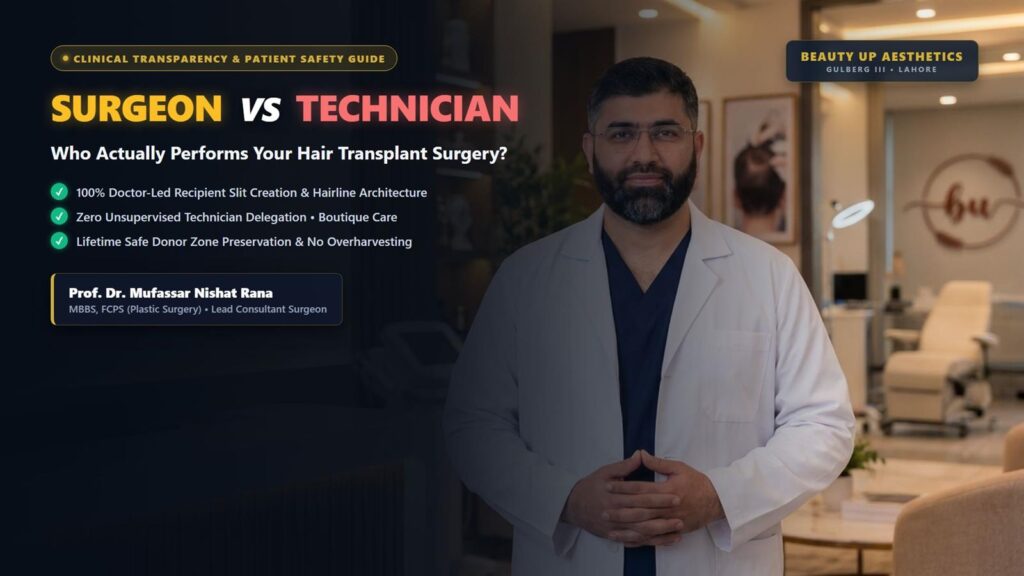
Surgeon vs. Technician in Hair Transplants: Who Actually Performs Your Surgery in Lahore?
Clinical Authority: Authored & Medically Verified by Prof. Dr. Mufassar Nishat (MBBS, FCPS Plastic Surgery) | Lead Consultant Surgeon at Beauty Up Aesthetics Lahore
One of the best-kept secrets in the global hair restoration industry—from commercial mega-clinics in Istanbul to high-volume commercial centers in Lahore—is the widespread practice of unsupervised technician delegation. Tens of thousands of patients each year walk into a clinic under the impression that an experienced doctor will perform their surgery, only to find that the physician merely steps in for a brief 2-minute greeting or hairline sketch before handing the scalpel, motorized punch, and surgical blades over to non-medical assistants.
At Beauty Up Aesthetics, we believe prospective patients deserve absolute medical transparency. Hair restoration is not a superficial spa service; it is an irreversible microsurgical procedure involving living human tissues, micro-vascular networks, and a strictly finite lifetime donor hair bank. Understanding who actually performs your hair transplant—and which specific surgical steps must never be delegated—is the single most decisive factor separating lifelong natural density from permanent scalp scarring and unnatural results.
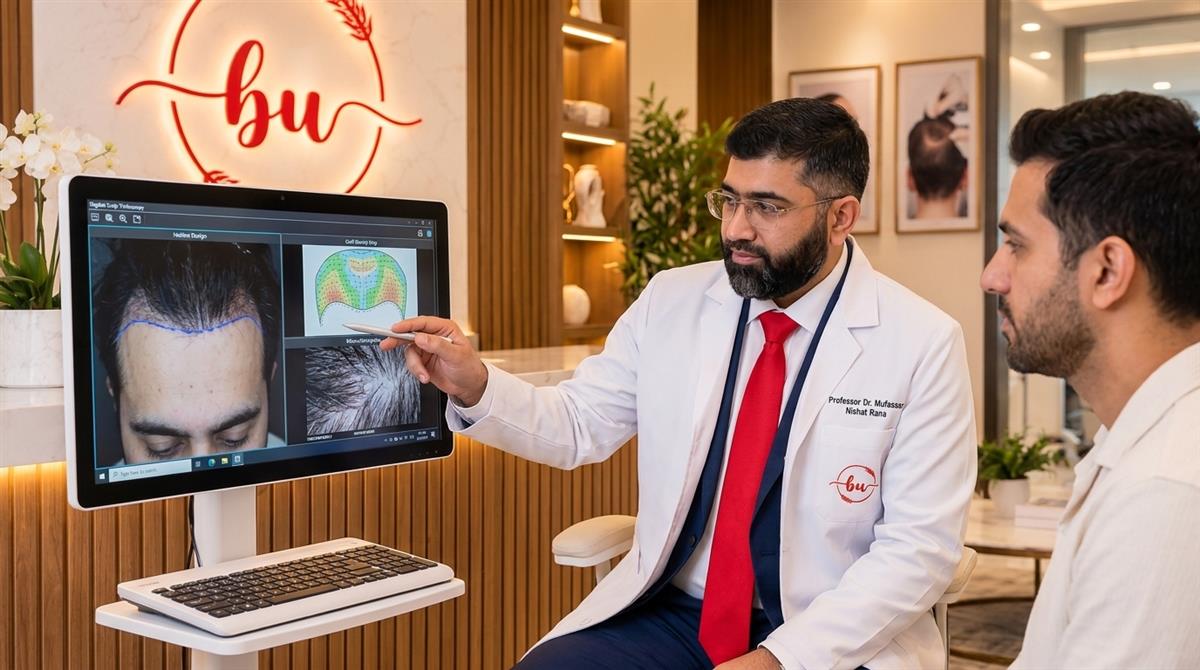
Fig 1. Pre-surgical clinical assessment: Prof. Dr. Mufassar Nishat personally analyzing donor density, scalp elasticity, and facial proportions before designing an individualized surgical plan.
1. The 4 Stages of a Hair Transplant: What a Doctor Must Do vs. What Technicians Can Assist
A successful hair restoration surgery consists of four distinct operational phases. In a certified, medically ethical clinic, there is a clear division between steps requiring a board-certified FCPS Plastic Surgeon and supportive roles performed by qualified surgical nurses:
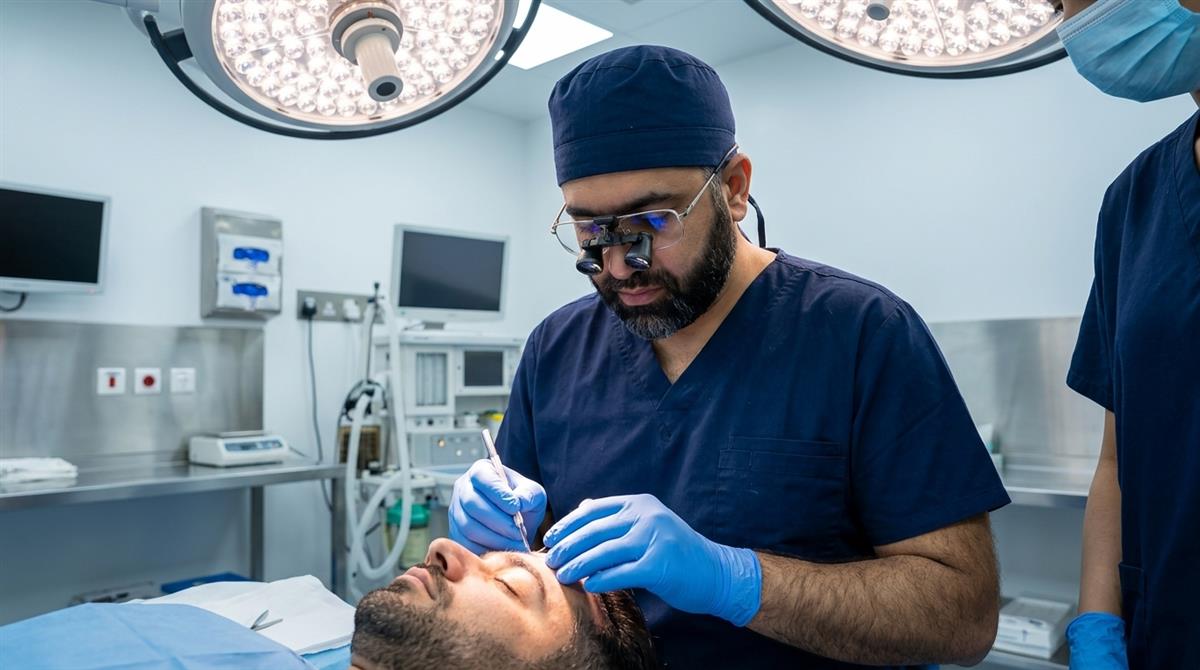
Fig 2. Precision canal opening: Prof. Dr. Mufassar Nishat personally creating custom recipient micro-incisions using imported sapphire blades, ensuring precise angles and tissue safety.
2. Why Recipient Site Creation is the Master Step: Why It Must NEVER Be Delegated
Many patients mistakenly assume that graft insertion is the most critical part of a hair transplant. In reality, the entire aesthetic and biological outcome of your procedure is determined during recipient site creation (making the slits or canals).
When a board-certified Plastic Surgeon makes every individual incision, they control four fundamental surgical variables:
- The Exit Angle: Natural hair does not grow straight up at a 90-degree angle. At the hairline, hair exits the skin at an acute 15° to 20° forward angle, gradually lifting to 30° to 45° as it transitions into the mid-scalp. Technicians often punch holes at haphazard angles, creating bristles that can never be combed naturally.
- Directional Flow and Whirlpool Geometry: In the crown (vertex), hair grows in an intricate spiral pattern (whorl). Replicating this whorl requires a Plastic Surgeon’s geometric understanding. An untrained technician opening incisions haphazardly results in an erratic, unmanageable crown.
- Incision Depth and Vascular Preservation: Cutting too deeply into the subcutaneous layer severs major arterial arterioles, starving the scalp of blood supply and causing central scalp necrosis (skin death). Cutting too shallowly causes graft popping and dehydration. Prof. Dr. Mufassar calibrates the slit depth exactly to the measured length of the patient’s follicular roots.
- Density Gradient (Grafts per $cm^2$): Packing too densely (over 65 slits/$cm^2$) compromises capillary perfusion, leading to widespread graft failure. An experienced surgeon establishes safe high-density micro-patterns (45–55 grafts/$cm^2$) that yield maximal visual fullness with optimal tissue survival.
3. Donor-Area Preservation: Protecting Your Finite Lifetime Asset
Your donor area—the permanent hair band running along the back and sides of your head—is finite and non-renewable. Once a hair follicle is extracted, it will never grow back in the donor zone.
Commercial “technician mills” in Lahore often compete on inflated graft numbers (“unlimited 5,000 grafts in one session!”). Because technicians are incentivized by sheer volume rather than lifetime outcomes, they harvest aggressively from small concentrated zones. The catastrophic result is:
- The “Moth-Eaten” Donor Look: Patchy, visible bald spots across the back of the head that make short hairstyles impossible.
- Harvesting Outside the Safe Donor Zone (SDZ): Follicles taken from the high nape or upper crown are genetically susceptible to DHT hormone. Within 3 to 5 years, these transplanted hairs will miniaturize and fall out permanently.
- High Transection Rates: Using blunt, oversized punches (1.0mm or larger) slices through adjacent hair bulbs underneath the skin, destroying 20% to 30% of grafts before they are even removed.
The Beauty Up Aesthetics Donor Stewardship Protocol:
Under the direct oversight of Prof. Dr. Mufassar Nishat, donor harvesting uses imported hybrid micro-punches (0.75mm to 0.85mm). We maintain a strict safe harvesting threshold (never exceeding 15% to 20% of donor density in a single session) with uniform inter-follicular spacing. This guarantees that your donor area looks thick, pristine, and untouched even with a short military fade, preserving reserve grafts for any future touch-ups in your 40s and 50s.
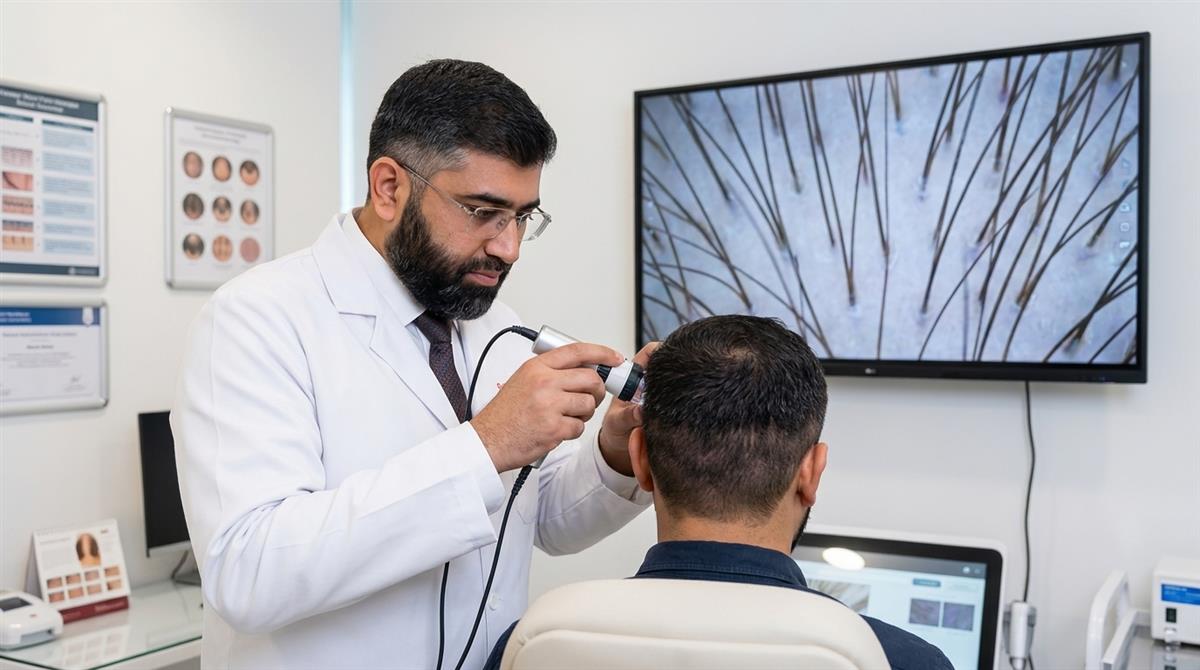
Fig 3. Laboratory graft bio-preservation: Extracted follicular units are immediately chilled in hypothermic holding solution and inspected under high-power stereomicroscopes to ensure 95%+ graft survival.
4. Documented 12-Month Results: How True Surgical Quality is Audited
In the era of social media advertising, clinics can easily hide poor surgical work behind wet hair styling, clever lighting angles, and concealing keratin hair powders.
How should an educated patient objectively evaluate surgical outcomes? At Beauty Up Aesthetics, our clinical results are judged by strict, verifiable medical standards:
1. Standardized Photographic Auditing
Results must be documented at baseline, 6 months, and 12 months under consistent, un-manipulated overhead medical lighting with dry hair, parting the hairline with a surgical comb to expose root emergence.
2. Follicle Survival Auditing (>95%)
By keeping extracted grafts in refrigerated nutrient holding solutions and limiting “out-of-body” ischemic time to under 4 hours, our graft survival rate consistently exceeds 95%, verified via high-magnification trichoscopy.
3. Single-Hair Hairline Feathering
Under stereomicroscopic sorting, only delicate single-hair follicular units are selected for the leading 10 to 15 millimeters of the hairline. Multi-hair grafts (2, 3, or 4 hairs) are reserved strictly for internal density behind the front rim.
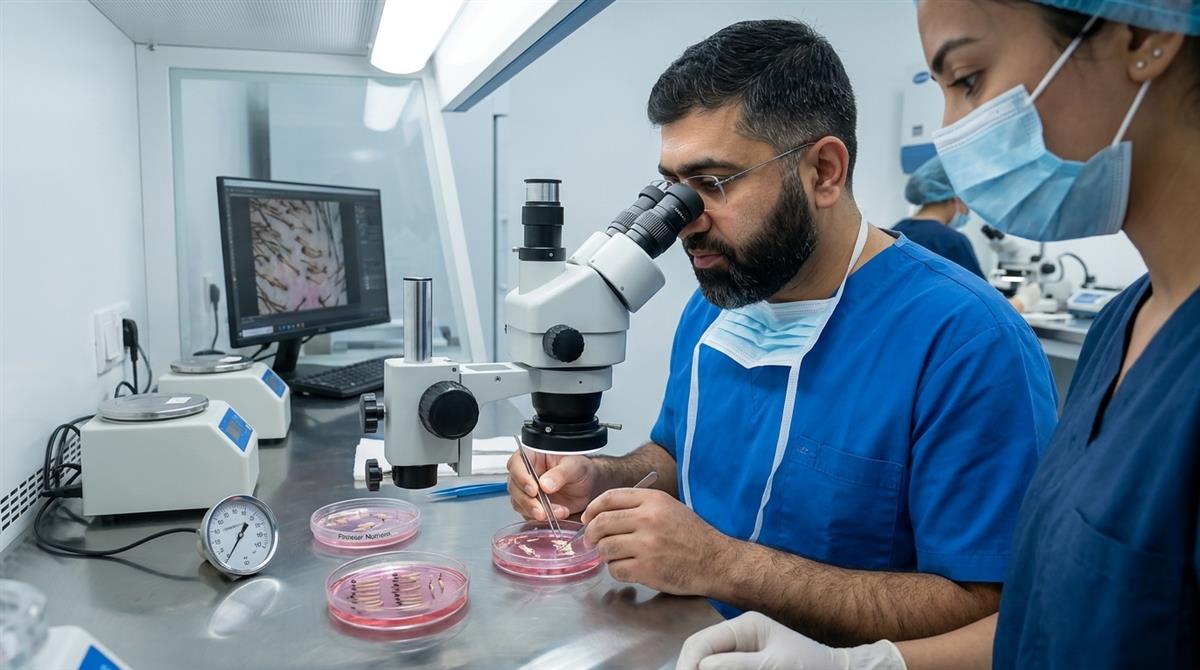
Fig 4. Complete 12-month documented restoration: Dense, natural hairline with seamless biological integration and preserved donor integrity under standardized clinical review.
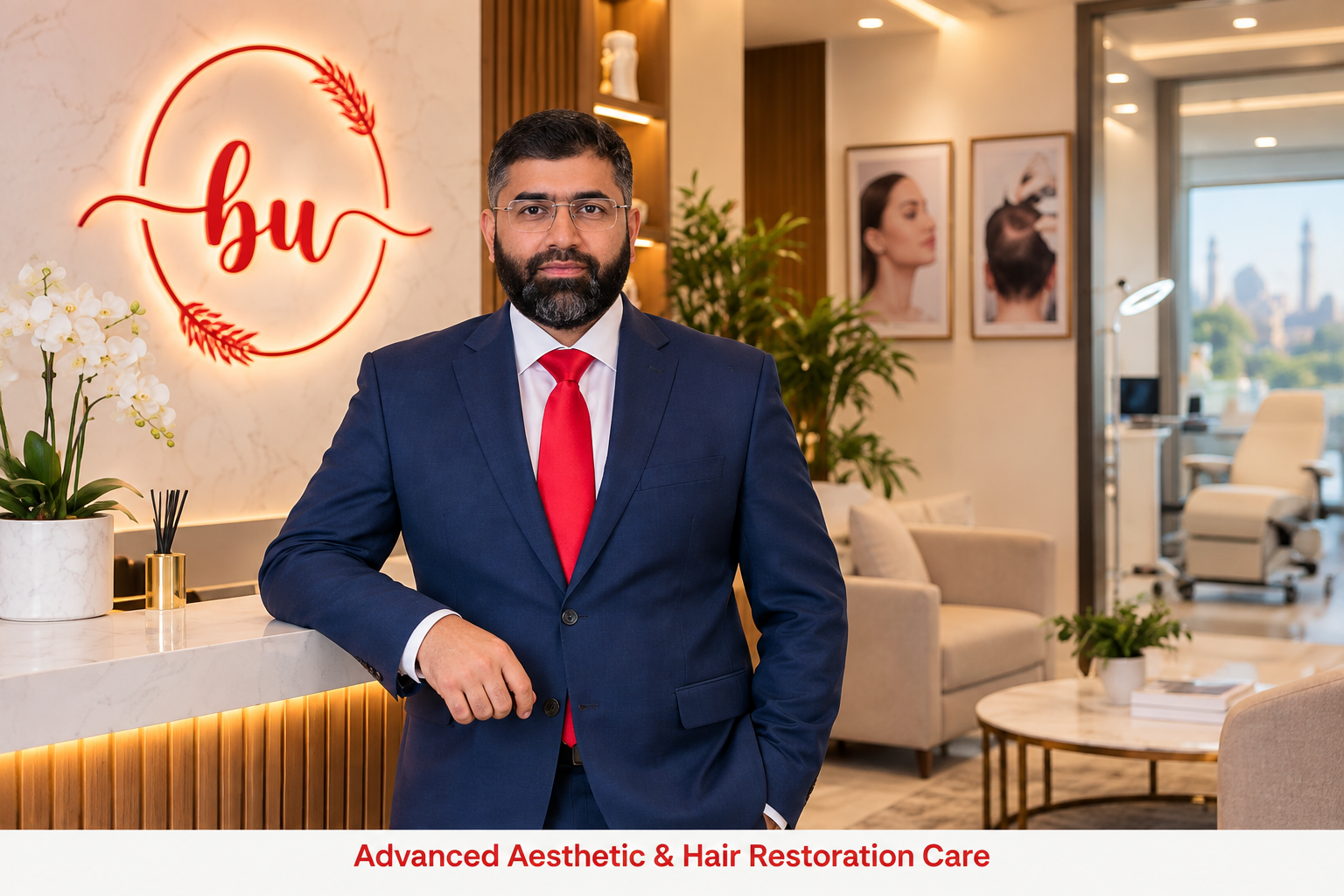
Prof. Dr. Mufassar Nishat
M.B.B.S, F.C.P.S (Plastic Surgery) | PMDC Verified
Professor Dr. Mufassar Nishat completed his postgraduate surgical training in Plastic and Reconstructive Surgery, earning the prestigious FCPS fellowship from Services Hospital, Lahore. Unlike general practitioners or commercial technicians operating in non-accredited setups, Dr. Mufassar combines 14+ years of microvascular reconstructive expertise with an artistic approach to natural facial aesthetics. Every surgical incision at Beauty Up Aesthetics is personally crafted by his own hands.
5. The 5-Point Patient Audit: What to Ask Before Paying a Deposit
Before you commit to a hair restoration clinic in Lahore, Islamabad, or Karachi, demand clear, written answers to these five questions:
-
“Who will make the recipient incisions (slits) in my scalp?”
If the answer is a “senior technician” or “assistant team,” walk away immediately. -
“What is the operating surgeon’s primary surgical qualification?”
Verify whether the doctor holds an FCPS or equivalent degree in Plastic Surgery or Dermatology, or merely an MBBS with an online diploma. -
“How many hair transplant surgeries does your clinic perform per day?”
Clinics operating 6 to 10 surgeries daily run automated “hair mills.” Ethical, surgeon-led practices like Beauty Up Aesthetics limit surgery to 1 to 2 dedicated VIP patients per day. -
“What punch diameter is used for donor harvesting?”
Ensure the clinic uses micro-punches (0.75mm – 0.85mm) rather than aggressive 1.0mm+ punches that leave large visible puncture scars. -
“Can I see unedited 12-month photographic documentation of patients with hair loss similar to mine?”
A confident surgeon will readily share clear, high-resolution before-and-after timelines demonstrating natural hair direction and intact donor zones.
6. Frequently Asked Questions (FAQ)
Q1: Is it illegal or unsafe for technicians to perform hair transplants without a doctor?
Under Pakistan Medical and Dental Council (PMDC) and international medical guidelines, any procedure that penetrates the dermis or involves surgical tissue excision must be directly performed and supervised by a licensed medical practitioner. Unsupervised technician surgery carries severe risks of infection, severe tissue scarring, arterial damage, and systemic local anesthesia toxicity.
Q2: What is the technician’s actual proper role in a hair transplant?
In an ethical surgical setting, highly trained technicians act as surgical assistants. Their primary duties include counting and sorting grafts under stereomicroscopes into 1-hair, 2-hair, and 3-hair groups, maintaining graft hydration in chilled preservation solutions, and gently sliding grafts into the surgeon-created recipient channels under strict surgeon supervision.
Q3: Why do technician-operated clinics charge significantly lower prices?
Technician-run clinics minimize operating costs by replacing an experienced board-certified Plastic Surgeon with low-wage staff and cycling 5 to 8 patients through the same rooms daily. While the upfront price is lower, the true cost often includes irreparable donor damage, unnatural hair direction, and expensive corrective revision surgeries later on.
Q4: How does Dr. Mufassar Nishat ensure natural hair angles during slit creation?
Dr. Mufassar uses custom-cut sapphire crystal micro-blades tailored to the patient’s hair caliber. He personally creates each recipient slit at an acute 15°–20° angle along the anterior hairline with subtle directional feathering, ensuring that as the hair grows over 12 months, it falls and styles completely naturally like an untouched head of hair.
Experience Surgeon-Led Hair Restoration at Beauty Up Aesthetics
Don’t leave your scalp to chance or commercial technicians. Schedule a direct one-on-one clinical evaluation with Prof. Dr. Mufassar Nishat (MBBS, FCPS Plastic Surgery) at our state-of-the-art Gulberg III clinic in Lahore.